
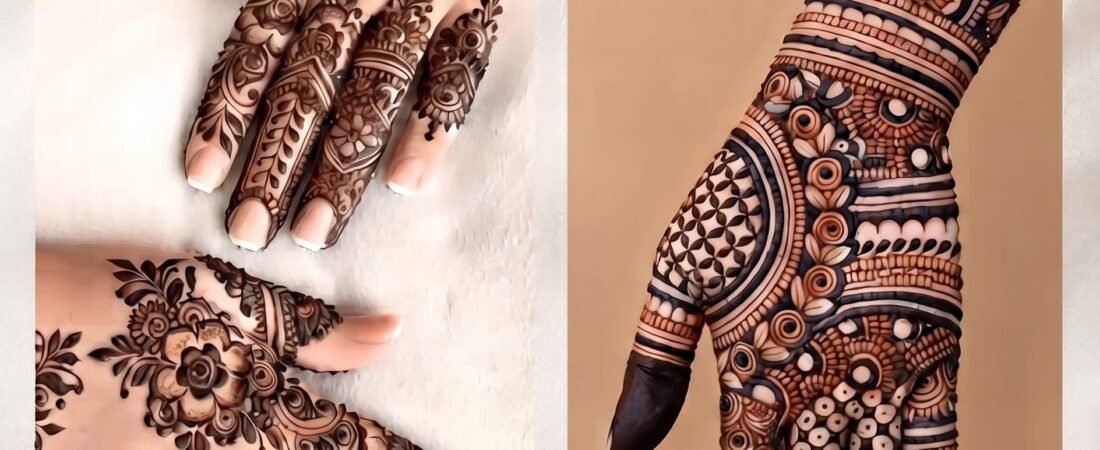
Selecting the perfect henna design is one of the most exciting decisions for a bride-to-be. The henna night is a celebration of artistry and heritage, but when it comes time to choose your pattern, you will likely find yourself deciding between the two most popular styles in the region: Khaleeji (Gulf) and Indian henna.
While both styles are breathtakingly beautiful, they offer entirely different aesthetics, application experiences, and overall vibes. If you are struggling to decide which style to request for your big day, here is our comprehensive guide to understanding the differences and choosing the perfect match for your wedding.
The Elegance of Khaleeji (Arabic) Henna
Khaleeji henna, originating from the Arabian Peninsula, is synonymous with elegance, flow, and modern sophistication. Rather than covering the skin entirely, this style uses the skin itself as a canvas, relying heavily on “negative space” to make the designs pop.
- Design Elements: You will typically see large, sweeping floral motifs, elegant vines, leaves, and bold geometric shapes.
- Structure: It is often asymmetrical. A classic Khaleeji design might trail beautifully from the tip of the index finger, across the back of the hand, and down to the wrist, leaving the other fingers bare or minimally decorated.
- Line Work: The lines are generally thicker and bolder, allowing the deep stain to stand out dramatically against the skin.
- The Vibe: Chic, graceful, and contemporary.
The Intricacy of Indian Henna
Indian henna (or Mehndi) is renowned for its breathtaking intricacy and storytelling capabilities. It is heavily rooted in tradition and is designed to look like a permanent piece of ornate, lace-like jewelry covering the skin.
- Design Elements: Expect tightly packed patterns featuring mandalas, paisleys, peacocks, and sometimes hidden elements like the groom’s name or even portraits of the bride and groom.
- Structure: Indian henna is typically symmetrical and offers full coverage. It leaves very little negative space, often covering the hands up to the elbows and the feet up to the knees.
- Line Work: The application requires incredibly fine, delicate lines to fit so much detail into the design.
- The Vibe: Grand, traditional, and highly detailed.
At a Glance: Khaleeji vs. Indian Henna
| Feature | Khaleeji (Gulf) Henna | Indian Henna |
|---|---|---|
| Coverage | Minimal to moderate; embraces negative space | Full coverage; extends up arms and legs |
| Motifs | Flowing vines, bold flowers, leaves | Paisleys, mandalas, intricate lace, figures |
| Line Thickness | Bold and thick | Fine and delicate |
| Application Time | 1 to 2 hours for bridal designs | 3 to 6+ hours for full bridal sets |
| Best For | Brides wanting an elegant, modern, or minimalist look | Brides wanting a traditional, elaborate, and grand aesthetic |
Which Style Suits Your Wedding?
Choosing between these two stunning styles comes down to your personal aesthetic, your wedding details, and your patience! Consider the following factors:
1. Your Wedding Dress
If your gown is heavily embellished with lace and beading, a bold Khaleeji design can prevent your overall look from feeling too “busy.” Conversely, if your dress is sleek, modern, and minimalist, intricate Indian henna can act as a stunning, contrasting accessory.
2. Your Patience Level
Applying full Indian bridal henna requires you to sit relatively still for several hours. If you want to spend your henna night dancing and mingling rather than sitting in a chair, a Khaleeji design is much faster to apply and dries quicker.
3. The “Fusion” Option
Can’t decide? You don’t have to! Many modern brides opt for Indo-Arabic fusion. This style combines the bold, flowing floral outlines of Khaleeji henna with the intricate, delicate interior fillings of Indian Mehndi, giving you the absolute best of both worlds.
Ready to Book Your Bridal Henna?
Whether you are dreaming of sweeping Arabic vines or delicate Indian lace, explore our artist directory at HennaOman.com to find the perfect henna artist to bring your bridal vision to life.