
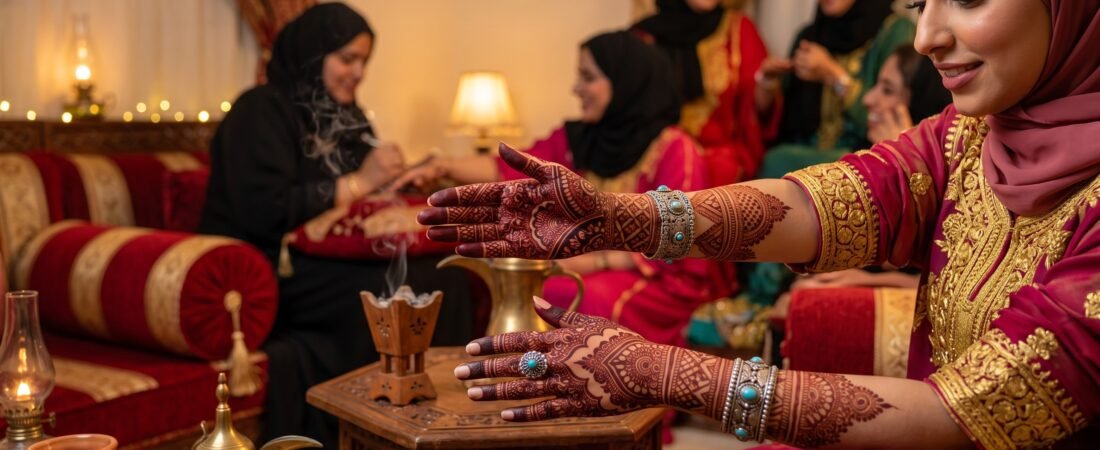
The journey to an Omani wedding is filled with vibrant celebrations, but few events are as deeply cherished as the Henna Night. Known locally as Laylat Al Henna, this celebration is a beautiful blend of artistry, sisterhood, and ancient tradition.
Whether you are a local bride planning your dream wedding or an expatriate embracing local customs, understanding the nuances of Omani bridal henna is essential. Here at HennaOman.com, we have put together the ultimate guide to help you navigate the traditions, schedule your timings, and know exactly what to expect on your special night.
The Significance of the Omani Henna Night
In Omani culture, henna is much more than a temporary cosmetic dye; it is a symbol of joy, good luck, and protection against the evil eye. The henna night in Oman is traditionally an intimate, women-only gathering held a few days before the main wedding reception. It serves as a rite of passage, allowing the bride to relax, celebrate with her closest female relatives and friends, and be adorned with intricate art that signifies her transition into married life.
Traditional vs. Modern Omani Henna Designs
When it comes to bridal mehndi in Oman, brides today have a stunning array of choices that bridge the gap between heritage and contemporary aesthetics.
- Traditional Omani Henna: Historically, Omani designs are characterized by bold, geometric patterns, intricate floral motifs, and solid shading on the fingertips and palms. The color is typically a deep, rich red or burgundy.
- Modern Gulf (Khaleeji) Henna: Many modern brides opt for Khaleeji designs, which feature sweeping vines, elegant roses, and plenty of negative space to create a delicate, lace-like appearance.
- Fusion Styles: It is increasingly common to see a fusion of Indian and Arabic styles, incorporating fine lines, mandalas, and personalized elements like the groom’s initials hidden within the design.
Tip: When consulting with a Muscat henna artist, bring reference photos from our HennaOman.com gallery to ensure your visions align.
Timings: When to Book and Apply Your Henna
Timing is everything when it comes to achieving that perfect, dark henna stain for your wedding day.
Booking Your Artist
Top-tier henna artists in Oman get fully booked months in advance, especially during the peak wedding season (October to March). You should aim to secure your artist at least 3 to 6 months prior to your wedding date.
Application Timeline
- 2 to 3 Days Before the Wedding: This is the sweet spot. Natural henna takes roughly 48 to 72 hours to oxidize and reach its darkest, most vibrant peak color.
- The Application Process: Depending on how elaborate your chosen henna designs are, the application can take anywhere from 3 to 6 hours for a full bridal set (hands, arms, feet, and legs).
What to Expect on Your Henna Night
To ensure your Laylat Al Henna goes smoothly and you get the best possible stain, keep these essential tips in mind:
- Pre-Henna Prep: Exfoliate and wax your arms and legs a day or two before your henna application. Do not apply heavy lotions or oils on the day of the event, as they create a barrier that prevents the henna from absorbing into the skin.
- The Waiting Game: Once the paste is applied, you will need to sit relatively still for several hours. Ensure you are sitting in a comfortable position, wearing loose clothing, and have a designated friend or bridesmaid to help feed you and keep you hydrated!
- Aftercare is Crucial: Once the paste dries, avoid washing it off with water. Instead, gently scrape it off. Apply a natural balm, olive oil, or Vicks VapoRub to the design to keep it warm, and avoid water contact for at least 12 to 24 hours to allow the color to fully deepen.
Ready for Your Dream Bridal Henna?
Your henna night is a milestone you will remember forever. At HennaOman.com, we connect you with the finest artists to bring your bridal vision to life. Explore our directory of talented professionals, browse inspiring galleries, and book your perfect artist today to ensure your wedding celebrations are truly unforgettable.